
Your Skin Is Trying to Tell You Something: How to Know Your Skin Type
Introduction

Your skin communicates with you every day. Excessive shine, dryness, redness, irritation or uneven texture can all be clues about what your skin needs. But with so many skincare products available today, it is easy to focus on what a product promises rather than understanding your own skin first.

Knowing your skin type can help you make better skincare choices. However, it is equally important to understand that your skin type is different from your skin concern.

How to Identify Your Skin Type at Home ?

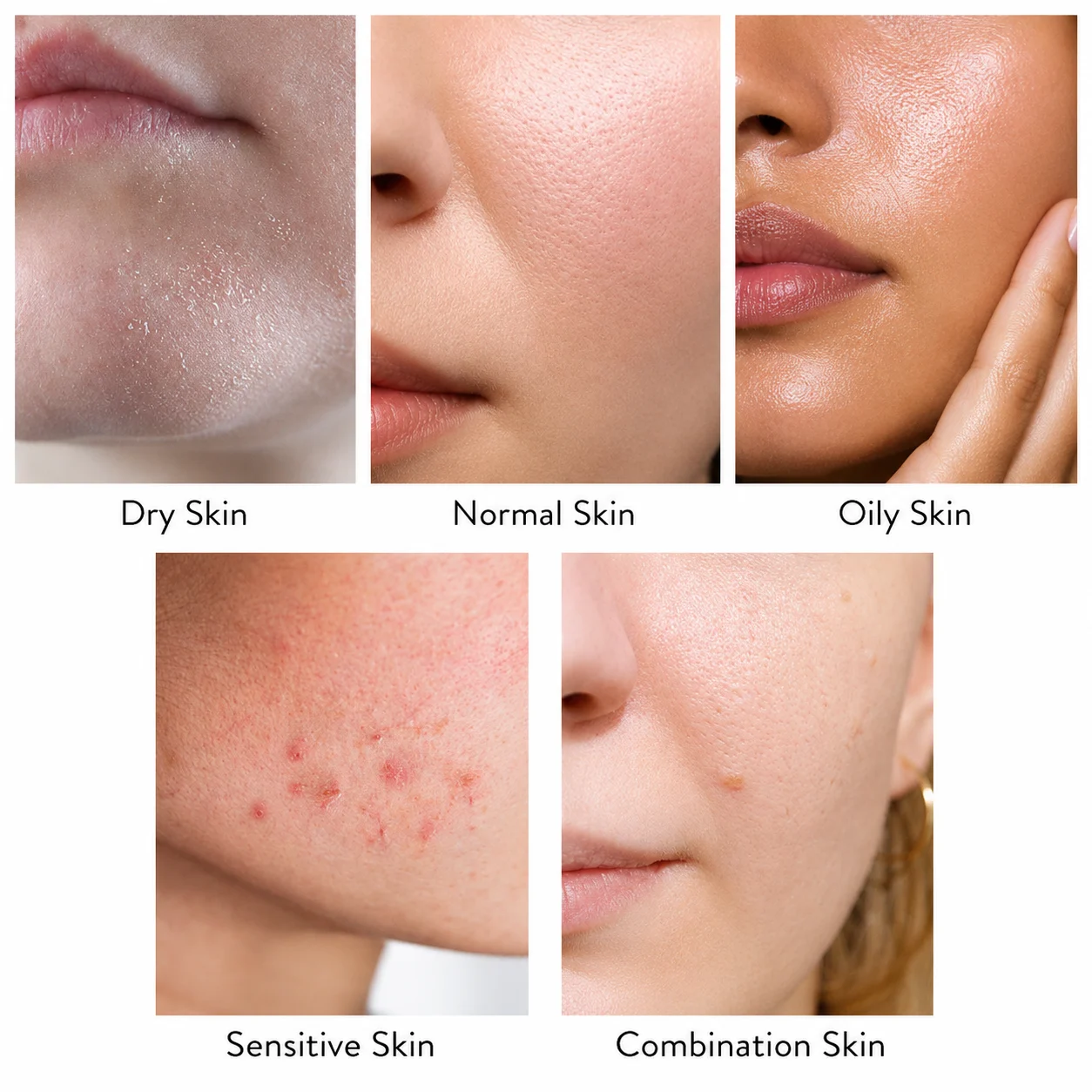
You can start with a simple observation test. Wash your face with a gentle cleanser and pat it dry. Avoid applying moisturiser, serum, sunscreen or any other skincare product. Leave your skin bare for about 30 minutes and then observe how it looks and feels.

1. Oily Skin

If your entire face looks noticeably shiny or greasy after cleansing, you may have oily skin.

Oily skin is generally associated with increased sebum production. You may also notice enlarged pores, frequent blackheads or a tendency for breakouts. However, having oily skin does not automatically mean that your skin is unhealthy. The goal is to maintain balance rather than remove all the natural oil from your skin.

2. Dry Skin

Does your face feel tight, rough or uncomfortable after cleansing? Do you notice flaking or a lack of softness?

These may be signs of dry skin. Dry skin occurs when the skin does not retain enough moisture and can feel particularly uncomfortable after washing.

If your skin feels dry, avoid assuming that using more products is always the answer. A simple, gentle skincare routine can often be a better starting point.

3. Combination Skin

If your forehead and nose appear oily, while your cheeks feel normal or dry, you may have combination skin.

This means different areas of your face behave differently. As a result, using the same approach across the entire face may not always be ideal. Your routine may need to focus on maintaining hydration while managing oiliness in specific areas.

4. Sensitive Skin

Does your skin frequently become red, sting, burn or feel irritated after using certain skincare products?

You may have sensitive or reactive skin.

Sensitivity can be influenced by several factors, including the skin barrier, environmental exposure and certain ingredients. Persistent or severe reactions should not simply be assumed to be a skin type and may need professional evaluation.

5. Normal Skin

If your skin feels comfortable and balanced, without excessive oiliness, dryness or irritation, you may have normal skin.

Normal skin can still develop concerns such as acne, pigmentation, fine lines or sensitivity. So, having a balanced skin type does not mean that you do not need a skincare routine.

Skin Type vs Skin Concern: Know the Difference

One of the most common skincare mistakes is confusing skin type with skin concern.

For example, you can have:
This is why choosing a product simply because it says “for oily skin” or “for dry skin” may not address the actual problem.
Your skincare routine should consider both your skin type and your specific concerns.

Can Your Skin Type Change?

Yes. Your skin can behave differently at different stages of life.

Tips to Maintain Healthy Vitamin D Levels

Factors such as weather, hormonal changes, age, stress, lifestyle and skincare habits can affect the way your skin looks and feels.
For example, your skin may become oilier in hot and humid weather or feel drier during colder or less humid conditions. Hormonal changes can also influence oil production and breakouts.
This is why it is useful to reassess your skin from time to time instead of following the same routine indefinitely.

Conclusion

Yes. Your skin can behave differently at different stages of life.

Understanding your skin type helps you make smarter skincare choices. But don’t just ask, “Which product suits my skin type?” Ask, “What does my skin actually need?”

that suits your skin. For persistent concerns, a dermatologist can guide you with the right care.
Know your skin first. Then build your skincare around it.

Frequently Ask Question

We use only the best quality materials on the market in order to provide the best products to our patients.
Yes, it can contribute to hair loss in some people, but it is often one of several underlying factors.
Decrease in shedding is gradual and noticeable improvement may take 3–6 months, depending on the cause and individual response.
Not without a blood test and medical advice. Excess vitamin D can be harmful. Taking large amounts of D3 can cause nausea, vomiting, dehydration and constipation. Supplements should be taken after consultation with your healthcare provider.
If you notice excessive hair shedding, thinning, or patchy hair loss that persists for several weeks, consult a dermatologist for proper evaluation and treatment.

Leave a Reply

Your email address will not be published. Required fields are marked *